British tourists are changing their habits: The importance of package deals and value for money is growing

The UK outbound market continues to show strong demand for travel, but rising living costs are changing guest behaviour. New research shows...

Photo: Hulki Okan Tabak / Pixabay

Author  HrTurizam.hr

13. October 2026.

The UK outbound market continues to show strong travel demand, but rising living costs are changing guest behaviour. New research shows the growing importance of organised travel, travel agents and value for money. What do the changes in UK traveller habits mean for Croatian hoteliers, travel agencies and destinations ahead of the 2027 season?

Britons still want to travel, but they are increasingly careful about when to book a holiday, how much to spend and what they get for their money. That's one of the key messages from the latest research. Holiday Habits 2026-27, which the British travel association ABTA presented on October 13th at its annual convention in Madeira.

According to information reported by the British Guardian, 88 percent of respondents were on vacation during the past year, bringing overall travel preferences back to pre-pandemic levels. Of these, 74 percent traveled within the UK and 62 percent traveled abroad. At the same time, rising living costs and uncertainty around household budgets are increasingly affecting future travel plans.

At first glance, these are contradictory signals. On the one hand, travel remains an important part of British households' spending priorities. On the other, there is an increasing need to control overall holiday costs.

A separate survey published by ABTA on October 12 stated that 15 percent of respondents plan to reduce their vacation spending next year, with 52 percent of this group citing rising living costs as the main reason. A year earlier, this reason was cited by 47 percent of respondents who planned to reduce spending. For tourist destinations, this difference is important. A strong desire to travel does not necessarily mean the same length of stay, choice of accommodation or spending on additional amenities.

Guests want to travel, but are changing how they book

One of the more interesting findings of the new ABTA survey is the growing importance of travel agents and tour operators. The proportion of travellers who booked their holiday abroad through a travel professional has increased from 34% to 38 place, and the growth is particularly pronounced among younger travelers. Among travelers aged 18 to 24, the share of those using travel agents or tour operators has increased by six percentage points, to 35 percent. Among travelers over 65, the share reaches 44 percent.
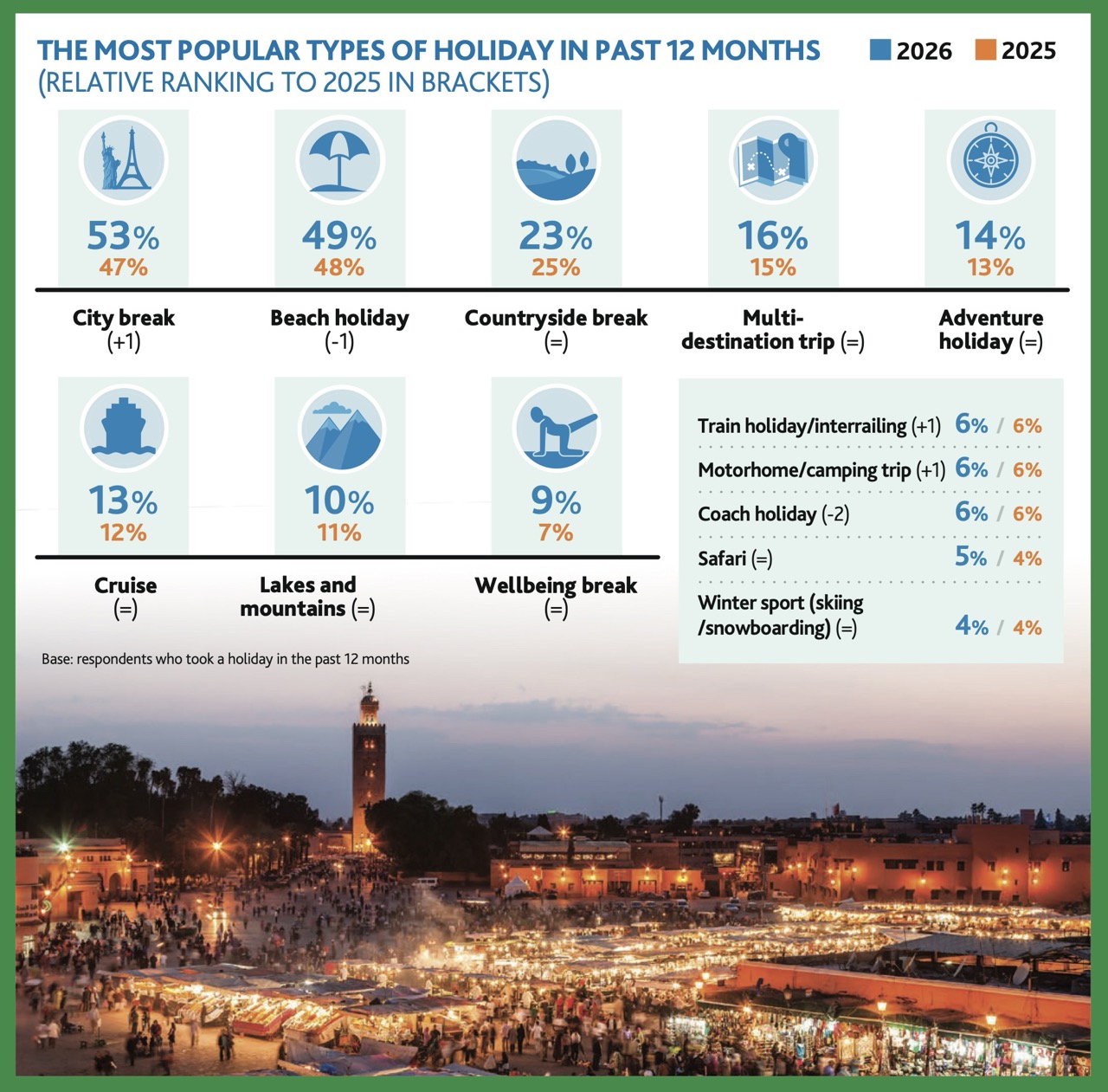
Screenshot 2026 10 13 at 13 3

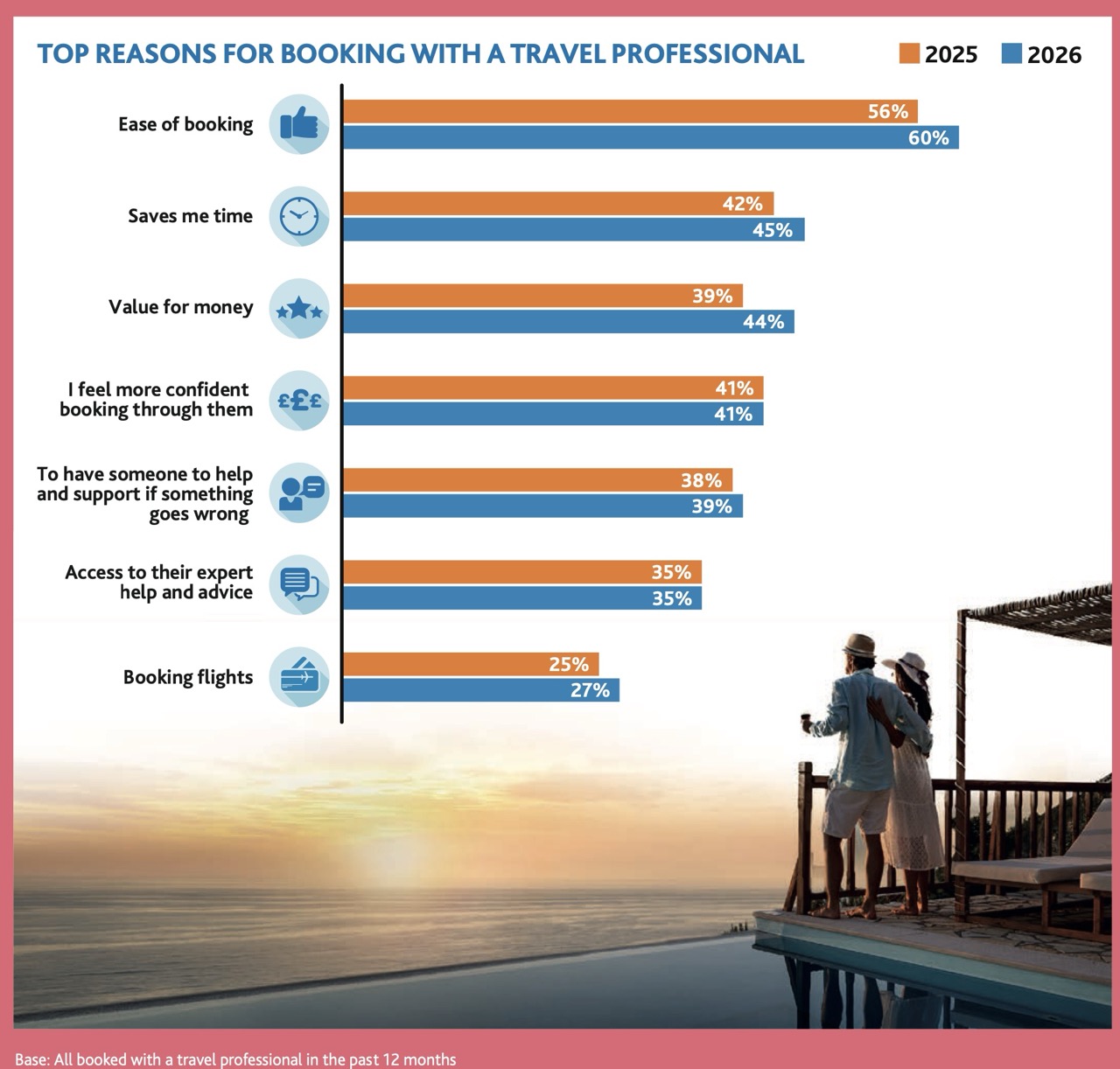
It is even more interesting why guests return to professional intermediaries. Ease of booking is still the most common reason, cited by 60 percent of users, while 45 percent point to saving time. However, 44 percent of users cite value for money as the reason for choosing a travel professional, five percentage points more than a year earlier.

Interest in package holidays is also growing. According to the survey, 63 percent of travelers who traveled abroad in the past 12 months booked a package holiday, an increase of two percentage points. Among families with children, this share is significantly higher, and value for money is the most frequently cited reason for choosing a package holiday.

Mark Tanzer, Chief Executive of ABTA, highlighted that tourism professionals play an important role in helping guests find a vacation that suits their desires, needs and financial capabilities. He stressed that the increasing importance of value for money opens up opportunities for travel agencies and tour operators to offer customers security, expert support and easier travel planning. These data show an interesting shift.

In a time when travelers have almost unlimited opportunities for independent research and booking, a segment of the market is once again finding greater value in an organized tourism product.

The reason does not have to be solely the lower price. A package that combines transportation, accommodation and additional services can offer the guest greater predictability of the total cost, simpler organization and less risk of unplanned expenses.

Late bookings significantly increase uncertainty for the tourism industry

The changes are not only visible in the selection of the sales channel, but also in the moment of making the decision about the trip.

In a statement to mark the start of the ABTA convention, Tanzer warned that more and more travellers are choosing to book much closer to their departure date, sometimes just weeks in advance. This behaviour is making it harder for hotels, tour operators and airlines to plan their business, especially in the face of rising operating costs.

"The geopolitical situation, climate events and wider economic circumstances have affected the way people travel and when they book", said Tanzer, warning that the increasingly pronounced trend of late bookings poses a challenge for tourism companies.

For hoteliers, this means a greater need for flexible pricing and capacity management, while for destination organizations, it makes it more difficult to estimate demand for certain periods in advance. However, booking later does not necessarily mean lower demand. It may mean that the guest is waiting for a better deal, is monitoring transportation costs, or simply wants more certainty before making a decision. This is an important distinction, especially for destinations that receive a large portion of their international demand via air travel.

What does this mean for Croatian tourism?

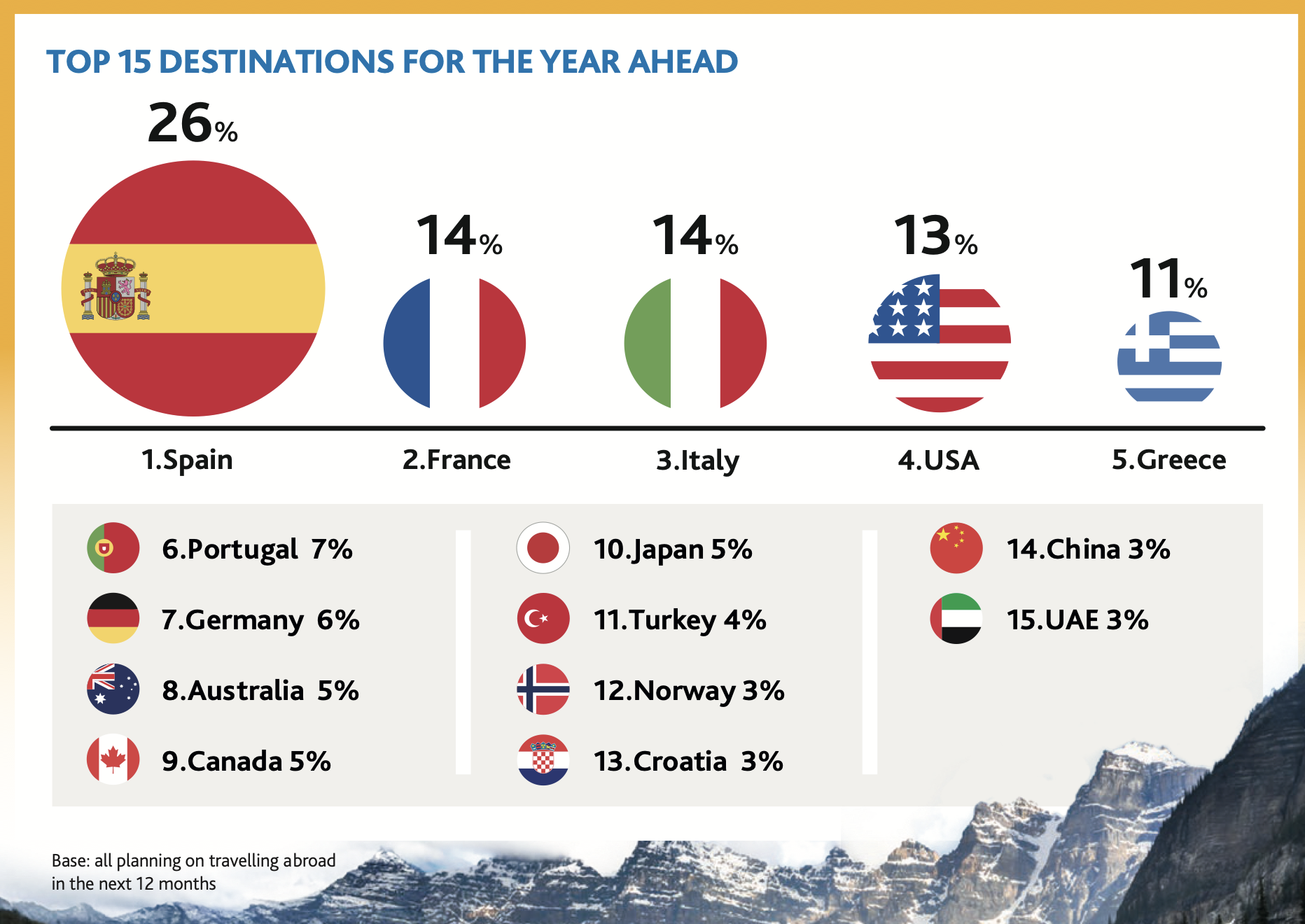
Screenshot 2026 10 13 at 13 2

The British market plays an important role for Croatia, especially for destinations that rely on international airlines, hotel accommodation and organised tours. According to the latest data from the Croatian National Tourist Board from the eVisitor system, In the first nine months of 2026, Croatia received 785.951 tourist arrivals from the United Kingdom, which is 2,1 percent more than in the same period last year. The British guests achieved 3.822.111 overnight stays, or 1,2 percent more than last year.

The data confirms that the British market is currently maintaining a positive trend, but also reveals an important difference: the number of arrivals is growing slightly faster than the number of overnight stays, which indicates a slight shortening of the average stay. 

If some of the guests continue to travel, but shorten their stay, choose more affordable accommodation or reduce spending on restaurants, excursions and additional facilities, the number of arrivals will not show the whole picture. Equally, the increase in the average price of accommodation does not automatically mean that the guest is ready to spend more on other services in the destination. That's why it's all the more important to differentiate the price of a tourist product from the value that the guest gets for their moneyCroatia competes not only with the prices of hotel rooms and apartments, but also with the overall experience of the destination: accessibility, gastronomy, local experiences, quality of service and amenities that make guests want to stay longer.

Value for money does not necessarily mean a cheaper holiday. A guest may be willing to pay more if they believe they are getting a better experience, simpler organisation or content that they cannot find elsewhere. This is particularly important in the debate about extending the tourist season. Guests looking for cheaper dates may represent an opportunity for the spring and autumn months, but only if the destination offers enough reasons to come then. Lower accommodation prices in themselves are not a tourism product.

Value for money is not just a matter of price

For Croatian hoteliers, agencies and tourist boards, the message of ABTA's research is not that we should expect a decline in the British market. 

It is more important to understand how the decision to purchase a tourism product changes. A traveler may still want Croatia, but may compare the overall costs with competing destinations, seek greater flexibility, or allocate the budget differently between accommodation and amenities.

Screenshots 2026 10 13 at 13

Screenshots 2026 10 13 at 13

The growth of interest in package arrangements also raises the question of how well the Croatian tourist offer connects its individual products. Hotel, local transport, gastronomy, excursions and authentic experiences can be significantly more competitive when they are presented to the market as a connected and clearly designed offer, and not as a series of separate services that the guest must independently research and organize.

This is precisely where destination organizations, hoteliers, agencies and local service providers have room for stronger cooperation. Not only in promotion, but also in the creation of a tourist product that provides the guest with a clear reason for choosing a destination.

ABTA's data also reminds us that the success of the outbound market cannot be measured solely by the number of guests. Length of stay, accommodation structure, seasonality, booking method and spending outside of the basic service are equally important.

In conclusion, ABTA's research Holiday Habits 2026-27 shows that the British have not lost interest in travel, but are becoming more cautious in planning and spending. Value for money is gaining importance, interest in organized trips and the services of travel professionals is growing, and booking decisions are increasingly being made closer to the departure date. For Croatian tourism, this is an important signal: the British market continues to show potential, but competitiveness will not depend only on the price of accommodation, but on the overall value of the offer, accessibility and quality of the experience that the destination provides.

Attachment: For more details, please visit Holiday Habits 2026-27

Author  HrTurizam.hr

13. October 2026.