EN
 HR
Interview with Srđan Hebar, journalist at Večernji List for the issue of Temu, September 29, 2024.
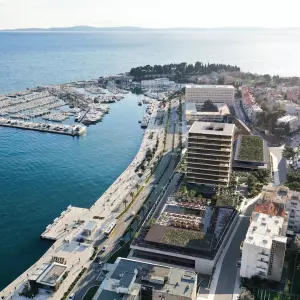
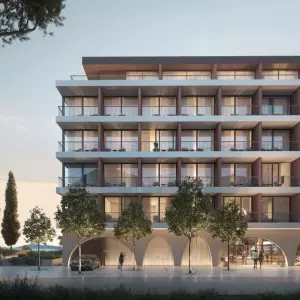
This is a final solution, a final reckoning with family accommodation. What is being done is in complete contradiction to the UNWTO sustainable tourism agenda. The result will be a completely concreted coast with thousands of mastodons, "aparthotels", in the nature of "mixed use" facilities that will be both residential and apartment buildings. This will "put out of the game" domestic apartment renters for the benefit of real estate capital. That is what is happening. Pure real estate business.
Tourism is something completely different, it is a tool for revitalizing areas that have no other economic basis. For places like ours on Krk, or some other island or coast, where there is no industry, where the population has been emigrating for generations...
Tourism in our places has turned out to be a good tool that will reverse the trend of people leaving, and even others coming to live. This should be the basic thought when thinking about a tourism development strategy. And it should primarily relate to – the person. Local, indigenous, domicile and if we want from a tax point of view, also a tax resident.
This means that anyone who lives in such an area should be encouraged or privileged over everyone else who is not a tax resident, who does not have a place of residence there, and who is not an active member of the local community.
A small municipality lives off income tax from employment and self-employment. And that tax is paid according to the place of residence. My place of residence is in Krk, and if I had, for example, an apartment in Zagreb that I was renting, I would pay income tax on that apartment and real estate tax there. But all other taxes – tax on my first income, tax on fees and the like, I would pay to Krk because my tax center is Krk.
I can't be on the same level as citizens who live in the metropolis for 12 months. Shouldn't I be, if I invested in an apartment in Zagreb, still in a less favorable position than the people of Zagreb? Because that person from Zagreb has a child, he goes to kindergarten. Kindergartens are built, teachers are hired, so the child starts school, schools are built for children, teachers and cleaners are hired, so the father will go to the neighborhood cafe with the boys, have a drink or two, and then he needs to hire a waiter. The family will also go to the tire repair shop in Zagreb, so he will also open a business because they come to him twice a year, he takes care of their tires. So he will go to the auto electrician and they will feed him, then to the hairdresser... After all, they pay income tax from their salary every month that goes to the metropolis' coffers. I don't. My tax goes to Krk.
I say all this because all economic and social activities are related to – the place of residence. We could apply this to any place in Slavonia, or on the Dalmatian coast and islands. It is clear that those who live there for 12 months – are heroes. And they must be rewarded, not punished.
And what about foreign property owners on Krk? Reward or punishment?
They pay taxes in their own country, and it is not clear how they can be in the same or better position than someone who lives on Krk or some other isolated island. A tax strategy must have a specific goal, and here we return to the story of how we must save ourselves from demographic collapse. The demographic picture in rural areas of Croatia is catastrophic, and legal changes such as the ones announced will also drive out the few people who live on the islands all year round.
We must not turn into a weekend country, we must keep young people from going abroad, and preserve life outside the large urban centers. And preserve that life throughout the 12 months, not just the two months when it is most attractive. It is clear that a distinction needs to be made as to who are – residents, those with permanent residence who make a full contribution to the community, and – who comes to the island as an investor. They cannot be treated the same by the tax authorities.
What will property owners have to pay?
Tax on income from property, i.e. renting apartments to tourists. The second is the tourist tax, or bed tax. The third is the membership fee for tourist associations, the fourth is the communal fees, that is, the local tax per square meter, and the fifth is the house tax for vacation homes, which is now becoming the real estate tax.
What is the solution?
Conversation. Communication with the field, because it seems that decisions are made in the cabinet. Our country is so different, each region has its own specificities, that it is impossible to take any one as an example for others. We need to open up communication, these are things that have been resolved for years. We need to record the situation, test measures, but in a partnership. We used to have a professional organization at the Croatian Chamber of Commerce, it was called the Family Tourism Association of the Croatian Chamber of Commerce, so we talked and looked for solutions.
How many landlords will be affected by the new taxes? You talked about the impact on landlords of family accommodation, who will get the biggest hit?
120.000 decisions for categorization have been issued, and most of them are people who are fully Croatian citizens, residents. As many as a third of these people, or 40.000, are pensioners. And they will be the first to be hit. The average Croatian renter of family accommodation has six beds for rent and generates an average of 5.500 euros in income, that second income from property. Of course, most of this accommodation is located on the coast, islands and in larger cities, in attractive locations. And let's take someone who has a 400 euro pension, and who earned, say, three or four thousand euros over the summer renting an apartment. He spends that money all year round - on medicines, bills, going to the store, he has to survive the winter. And now that he is burdened with yet another tax, it will "hit" him much more than anyone else.
Consider also the fact that older people can no longer clean themselves, kneel on the floor, stand on a chair and wash windows, but have to hire a service, a cleaner. Someone also has to manage their digital business, booking, arrivals and departures, check-ins and check-outs, correspondence with guests, and someone younger has to help them with that. When it all adds up, not only will such people be in the red because they have been renting out their homes to tourists in the summer for decades, but they will also be in debt, which will lead them to think about selling their property and going to some almshouse where they will end their lives, if they can find a place.
The state should actually protect us, primarily those proud, elderly people who have never been in debt to anyone. First of all, we need to have a different attitude towards a local person who rents or owns a weekend house. Why? Because both are tax residents in Croatia. Foreigners who are not tax residents in Croatia or in the place where they own real estate for leisure should be treated differently. Every state primarily takes care of its citizens, and no matter how much they want to, those who come to that place in another country from outside are not equal, right?
Imagine yourself, for example, in Augsburg or Bled. Do you have all the same rights as your local neighbor who has been here for generations? OK, if someone comes, changes their place of residence, and comes to live on the island, they should be stimulated and welcomed with open arms. So that when you look at Zagreb, Munich or Malinska, you can conclude that it is better to live in Malinska, that people move from large areas, that we reverse the trend. In the end, it is one thing for a foreigner who goes fishing with us and lives with us all year round, and another for a foreigner who brings his fellow foreigners to an unregistered apartment...
The problem is very practical, there are 20.000 of us who live there all the time and pay all taxes and duties. We also pay for those due to which roads were widened, water and sewage pipes were added, substations... expensive infrastructure. We pay for this infrastructure within 12 months with all the mentioned taxes and benefits, tourists also pay through the price of their stay, but vacation home owners pay far less.
You also mention suspicious foreign capital, what exactly is the problem?
People are coming, it's nothing new, with dubious capital from all over the continent. They build, they buy, they trade. This is driving up real estate prices, so tomorrow our children will no longer be able to buy real estate on the island. If someone doesn't inherit a house, they won't be able to buy anything to live in. They will have to move out. Imagine the retirees who don't have children here, the children have moved out, and they won't be able to withstand this tax pressure. They will have to sell the house, end their lives as we said before, and the children will have nowhere to return to... The fire in the hearth will go out.