Ilok brings together representatives from 16 countries: European wine routes as an opportunity for the development of rural tourism

The international conference in Ilok opened up the issues of developing wine destinations, connecting local producers and the tourist sector, and the role of the Euro...

Author  HrTourism Promo

10. October 2026.

The international conference in Ilok raised issues of developing wine destinations, connecting local producers and the tourism sector, and the role of European cultural routes in creating new economic opportunities for rural areas.

Wine tourism has been increasingly developing in recent years as a tourism product that goes beyond traditional visits to wineries and wine tastings. Connecting viticulture, gastronomy, cultural heritage, local producers and tourist services opens up the possibility of developing holistic destination experiences, especially in rural areas where tourism can contribute to the diversification of the local economy.

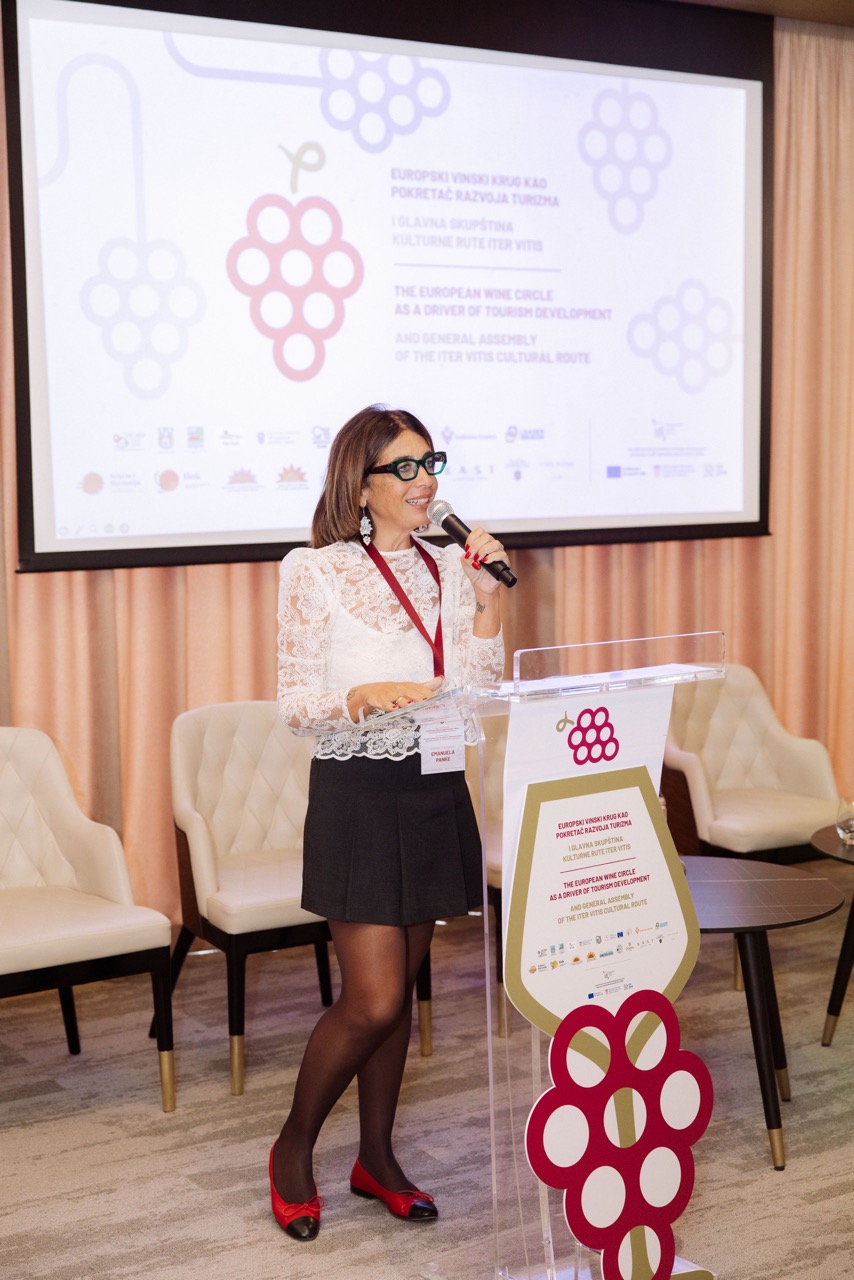
It is precisely this approach that is at the heart of the international conference. "The European Wine Circle as a driver of tourism development", which is being held at the Hotel Dunav in Ilok from October 9th and brings together representatives from 16 countries, experts in the fields of tourism, viticulture and winemaking, representatives of European institutions, tourist boards, development agencies, local action groups and the academic community.

The conference is part of the four-day international meeting and General Assembly of the European Cultural Route Iter Vitis, which will be held in Ilok from 8 to 11 October. The program is focused on the development of sustainable wine tourism, connecting European wine regions, exchanging knowledge and creating new opportunities for the economic development of rural areas. The choice of Ilok as the host of the international meeting is connected to its long viticulture and winemaking tradition, but also to the potential of the Croatian Danube region for the development of eno-gastronomic and cultural tourism. The historic core, old wine cellars, wine-growing landscape and local gastronomy form the basis of the tourist offer that can connect several different motives for arrival.

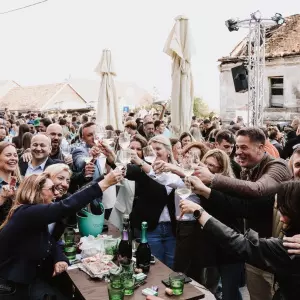
On the first day of the program, the participants of the international meeting toured the historic center of Ilok and the old Ilok wine cellars, after which a welcome reception was held at the KAST Winery.

Wine tourism as a link between the local economy and the tourist offer

One of the most important development issues of wine tourism is how to connect individual wineries, local producers, restaurateurs, accommodation facilities and cultural facilities into a recognizable tourist product.

Unlike a single winery visit, a destination approach involves multi-stakeholder collaboration, joint promotion, development of complementary content, and creation of reasons for visitors to stay longer. This opens up the space for tourism spending to be distributed across a wider range of local entrepreneurs, from family farms to restaurants, guides, and accommodation providers.

Iter vitis 5 large

The concept of the Wine Circle, which connects wine production with the tourist offer and other economic activities of the rural area, is based on this idea.

"Wine is one of the most powerful symbols of our rural areas, but also a great development opportunity. Our goal is to connect winemakers, tourism workers, local producers, cultural heritage and destinations into a unique tourist experience that creates added value and opens new jobs. Wine tourism does not end in the wine cellar. It includes gastronomy, tradition, nature, culture and, above all, people who preserve the identity of their regions. That is precisely why we are developing the concept of the Wine Circle, which connects all these values ​​and gives them a new tourist and economic dimension. We are especially pleased that this international meeting is being held in Ilok, a destination that best shows how a rich wine tradition can be transformed into a recognizable tourist product.", pointed out Dijana Katica, president of the Croatian Association for Tourism and Rural Development "Members' Club Selo".

Iter Vitis: Wine heritage as part of the European cultural and tourism network

An important international framework for the conference is Iter Vitis, a cultural route certified under the Cultural Routes program of the Council of Europe.

The Council of Europe's Cultural Routes programme connects destinations through a common historical, cultural and heritage theme, encouraging international cooperation, cultural exchange and the development of sustainable tourism. In the case of Iter Vitis, the common link is the wine and wine heritage, which includes much more than wine production. It is about cultural landscapes, historic vineyards, traditional knowledge, architecture, gastronomy and the way of life of local communities.

For destinations, inclusion in international cultural routes opens up opportunities for joint promotion, development of thematic tourism products, exchange of experiences and networking with partners from other countries. However, membership in an international network alone is not enough to achieve tourism and economic impacts. What matters is the extent to which such cooperation translates into concrete products, accessible content and recognizable experiences for visitors.

"Iter Vitis shows that wine is not only an economic product, but part of the common European cultural heritage. Through our route, we connect different countries, regions and communities, exchange knowledge and develop new models of sustainable tourism. Our wish is that European wine routes are a living network of people, experiences and destinations, and not just lines on tourist maps.", said Emanuela Panke, president of the European cultural route Iter Vitis.

Development of continental tourism and strengthening of local value chains

The development of wine tourism is particularly relevant for the continental parts of Croatia, where viticulture, agriculture, gastronomy and cultural heritage represent an important basis for tourism differentiation. Wine tourism can contribute to the development of the offer outside the main tourist season, encourage cooperation between the agricultural and tourism sectors and create additional market opportunities for local producers.

However, the development of such an offer does not depend only on the quality of the wine or the number of wineries open to visitors. Accessibility, organization of the experience, digital visibility, booking options, quality of interpretation and cooperation with other tourism service providers are equally important.

Sandra Posavec, director of the Directorate for Sustainable Development and Public Tourism Infrastructure of the Ministry of Tourism and Sports, emphasized the importance of linking wine tourism with sustainable development of destinations. "The development of tourism in Croatia is increasingly directed towards sustainability, quality and more balanced development of all parts of the country. Wine and rural tourism play a particularly important role in this because they create opportunities for the development of continental destinations, stimulate the local economy and contribute to the preservation of cultural and natural heritage. The Ministry of Tourism and Sports supports initiatives that connect the public and private sectors, encourage innovation and develop authentic tourism products.", Posavec pointed out.

Iter vitis 11 large

LEADER approach: From individual wine roads to joint development of the destination

One of the professional topics of the conference refers to the application of the LEADER approach in the development of wine roads.

LEADER is an approach to local development within the framework of the European Common Agricultural Policy, which starts from the needs of local communities and involves cooperation between the public, private and civil sectors. Local action groups (LAGs) play an important role in its implementation, connecting different stakeholders and participating in the shaping of local development strategies.

In the context of wine tourism, such an approach can be important for the connection of smaller producers, the joint development of infrastructure, interpretation content and tourist products, and the harmonization of individual investments with the wider development needs of the destination. This is especially relevant for rural areas where individual producers often do not have enough capacity for independent development of more complex tourist products or international market promotion.

The development of wine roads is therefore not just a matter of marking routes and connecting wineries on a map, but also of organizing the supply, quality management, joint presence on the market and long-term cooperation between local stakeholders.

Climate change, digitization and the new generation of rural tourism

The conference's professional program also includes topics that are increasingly influencing the future of European wine-growing regions, from climate change and sustainable viticulture to digitalization and the inclusion of new generations in the rural economy.

Climate change is a particularly important challenge, as changes in temperature, rainfall patterns and weather extremes affect grape production conditions, wine-growing landscapes and the long-term sustainability of wine regions. This makes the issue of climate change adaptation relevant not only for agriculture but also for the tourism development of destinations whose identity is linked to wine-growing. Participants from Croatia, Spain, Turkey, Romania, Greece, Israel and other countries exchange experiences on the development of wine routes, cross-border cooperation and examples of good practice. Special attention is paid to the role of young people, women, Croatian emigrants and returnees in the transformation of rural tourism and the possibilities of applying digital tools and modernising the AKIS system, i.e. the agricultural knowledge and innovation system.

These are topics that link tourism development with broader challenges in rural areas, including demographic change, knowledge transfer, entrepreneurship, and creating conditions for long-term sustainable economic activities.

Ilok as a place for international exchange of knowledge and experiences

The conference is being held as part of the implementation of the Annual Action Plan of the National Network of the Common Agricultural Policy, co-financed by the European Union and the Ministry of Agriculture, Forestry and Fisheries of the Republic of Croatia. The international meeting in Ilok thus connects European cultural cooperation with specific development issues of rural tourism. For wine destinations, the key challenge remains how to transform the existing production, natural and cultural heritage into an organized, marketable and long-term sustainable tourism offer that creates value for the local economy and community.

Author  HrTourism Promo

10. October 2026.